
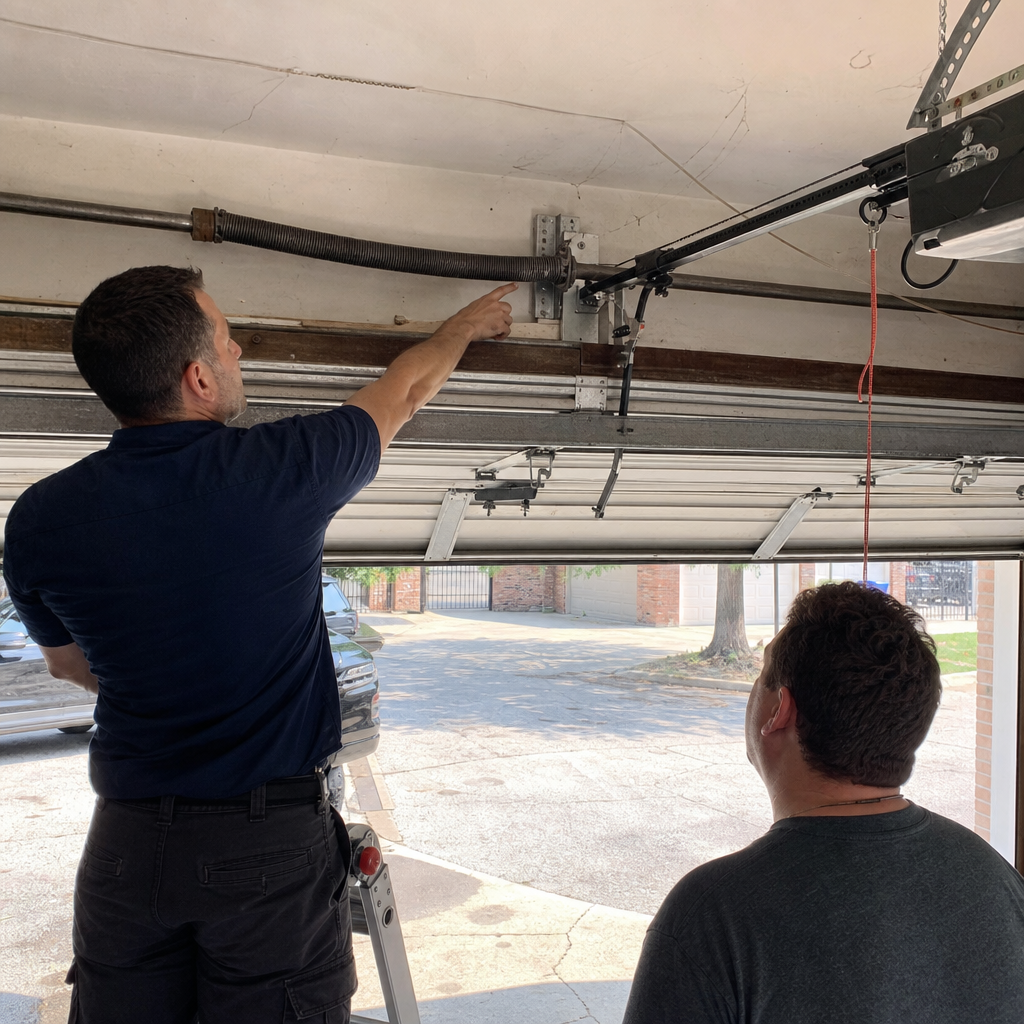
Why Does My Garage Door Reverse in Chicago? The Frozen Seal Problem Most Technicians Miss
Your garage door reverses because the opener’s safety system detects unexpected resistance and assumes there’s an obstruction. In Chicago’s alley garages, the most common winter cause isn’t broken sensors—it’s your bottom seal frozen to the concrete apron, creating a momentary drag that the opener interprets as a blocked path. The door works fine by afternoon because the sun and traffic vibration break the bond, but it’ll reverse again the next sub-zero morning.
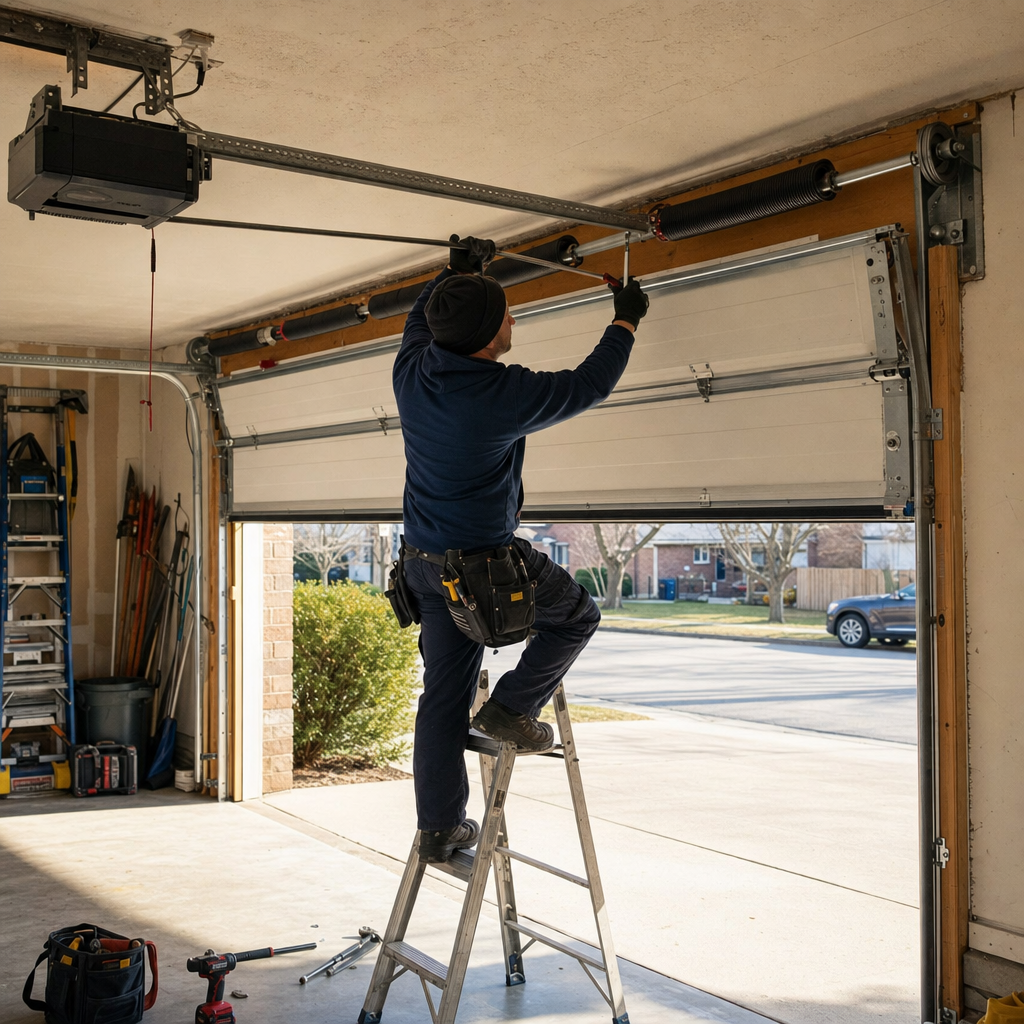
If this pattern sounds familiar, you’re not dealing with an electronics failure. You’re dealing with physics that Edward Campbell, Owner & Lead Technician at Regal Garage Door Repair Greater Chicago, sees dozens of times each January and February across the city’s bungalow belt. We’ve been handling garage door repair calls in Chicago for eight years, and the frozen-seal reversal is so predictable we can often diagnose it over the phone before we roll a truck.
How Chicago’s Alley Garages Create a Unique Reversal Problem
Chicago’s roughly 1,900 miles of residential alleys mean most of our garage door calls involve detached, alley-accessed structures built between the 1910s and 1950s. These garages weren’t designed for modern climate-controlled conditions. The concrete aprons are rarely level after decades of freeze-thaw heaving, and the 8-foot-wide openings common to Chicago bungalows and two-flats leave little margin for error when a seal bonds to uneven concrete.
Here’s what happens on a typical January night in Bridgeport, Avondale, or Jefferson Park: temperatures drop below zero, Lake Michigan’s lake-effect moisture settles into every gap, and the rubber or vinyl bottom seal—already hardened by years of Chicago’s aggressive freeze-thaw cycling—freezes to the concrete. When you hit the opener in the morning, the motor encounters resistance for the first 6–12 inches of travel. Modern openers, particularly LiftMaster and Chamberlain units with force-limiting safety systems, read that resistance as a child or pet under the door and reverse immediately.
By noon, the seal has warmed enough to break free, or enough alley traffic has vibrated the bond loose. The door works perfectly. You assume it was a fluke. The next morning, same reversal.
We’ve replaced perfectly good Genie openers because homeowners and less-experienced technicians assumed the electronics were faulty, when the real problem was a $35 seal and a seasonal calibration issue. That’s the kind of misdiagnosis that costs Chicago homeowners hundreds unnecessarily.
Three Field Tests to Diagnose What’s Actually Causing Your Reversal
Before you call anyone, spend four minutes running these tests. Each one isolates a different failure mode, and the results will tell you whether you’re looking at a frozen seal, misaligned safety sensors, or drifting limit switches.
Test 1: The Mid-Door Obstruction Check (Sensor vs. Force-Limit)
Place a solid object like a scrap 2×4 flat on the ground in the door’s path, roughly halfway down the travel. Close the door. If it reverses on contact with the board, your safety sensors and force-limit system are both functional—the door is correctly detecting an obstruction. If it crushes the board or fails to reverse, you’ve got a safety system failure and need a technician immediately.
Now remove the board and close the door normally. If it reverses at the bottom with no obstruction present, but passed the board test, you’ve isolated a force-limit issue rather than a sensor issue. In Chicago winter, that almost always means frozen seal or track binding.
Test 2: The Manual Release and Lift Test (Mechanical Binding)
Pull the red emergency release cord to disconnect the opener. Try lifting the door manually. It should move smoothly with moderate effort and stay open at waist height. If it sticks at the bottom, requires excessive force, or won’t stay open, you’ve got mechanical binding—frozen seal, corroded rollers, or track misalignment—not an opener problem.
In Chicago’s east-facing alley garages, we’ve seen sustained lake wind create enough lateral pressure to bow panels slightly and increase roller drag in the tracks. This causes intermittent reversal that looks random but actually correlates to wind direction and speed. A door that reverses on windy mornings but works calm afternoons is telling you something specific about pressure loading, not opener failure.
Test 3: The Sensor Alignment Check (Electronics)
Look at the LED indicators on your safety sensors—one on each side of the door, near the floor. Both should show solid lights (color varies by brand; Chamberlain and LiftMaster typically use amber and green). If either light is blinking or off, the beam is interrupted or misaligned. Clean the lenses with a dry cloth first—road salt spray from Chicago alleys coats everything—and check for physical displacement. If cleaning doesn’t restore solid lights, realign the sensors until both LEDs hold steady.
Here’s the key: sensor misalignment causes reversal at the same point every time, usually 6–12 inches off the ground, regardless of temperature or time of day. Frozen-seal reversal happens only at the very bottom, only in cold conditions, and typically resolves by midday. If your reversal pattern matches temperature rather than door position, skip the sensor adjustment and look at the seal.
Why Force-Limit Recalibration Should Be Your Last Resort
Every major opener brand—LiftMaster, Chamberlain, Genie, Raynor—ships with adjustable down-force limits. These settings tell the motor how much resistance is acceptable before assuming an obstruction. In theory, dialing up the force limit would let your opener push through a frozen seal.
We don’t do it, and we advise against anyone doing it themselves.
The force-limit setting is a safety mechanism, not a convenience adjustment. It’s calibrated to stop a descending door on a small child or pet. Cranking it higher to overcome seasonal freezing defeats that protection and creates genuine liability. We’ve seen the aftermath in Chicago emergency rooms, and we won’t participate in it.
The correct hierarchy is mechanical fix first, calibration adjustment only after mechanical causes are eliminated and only by a technician who understands the safety implications. At Regal Garage Door Repair Greater Chicago, Edward handles this personally—he’ll tell you when a repair makes sense and when it doesn’t, even if the honest answer costs him a sale. That’s the “8 years, one standard” approach we’ve built our reputation on.
Practical Fixes for Chicago’s Frozen-Seal Reversal
Based on what we see across Chicago’s bungalow belt and two-flat neighborhoods, here’s the fix sequence that actually works:
- Silicone lubricant on the seal edge before freeze season. Apply a thin film of silicone spray to the bottom contact surface of the seal in late October or early November. This creates a release layer that prevents bonding without attracting dirt like petroleum-based products. Reapply monthly through February.
- Seal replacement if cracked or hardened. Chicago’s freeze-thaw cycling destroys rubber and vinyl faster than inland markets. If your seal has visible cracks, permanent deformation, or has lost flexibility, replacement runs $150–$600 depending on door width and seal type. We stock seals for all major brands including Clopay, Amarr, and Wayne Dalton doors.
- Track and roller service if binding persists. Corroded galvanized tracks and worn rollers create drag that mimics frozen-seal resistance. Roller replacement runs $110–$220; track realignment is $120–$240. We address this as part of our standard Garage Door Repair in Chicago service.
- Force-limit verification only after mechanical fixes. Once the door moves freely by hand, we check and document the opener’s force settings. If adjustment is needed, we do it with the safety parameters intact and explain exactly what we changed.
The silicone trick alone eliminates maybe 60% of the frozen-seal reversals we get called about. It’s a $12 can of spray and ten minutes of your time versus a service call. Edward’s been telling customers this for years—”Tell me what it’s doing and I’ll tell you exactly what’s wrong — no guessing, no upselling”—and sometimes the honest answer is a hardware store trip, not a technician visit.
When the Problem Isn’t the Seal: Limit-Switch Drift and Wind Loading
Two other Chicago-specific causes deserve mention because they get misdiagnosed as generic “opener problems.”
Limit-switch drift happens when the opener’s travel limits—the electronic stops that tell the motor when the door is fully open or closed—gradually shift from vibration and thermal cycling. A door that reverses 2–3 inches from the floor, consistently, regardless of temperature, often has a closing limit that’s drifted too far down. The motor thinks it hasn’t reached the floor yet, keeps driving, hits mechanical resistance, and reverses. This is a calibration issue, not a mechanical failure, but it requires specific knowledge of your opener model to correct without creating new problems.
Wind loading on east-facing doors is the one that frustrates homeowners most because it looks random. Sustained easterly wind off Lake Michigan creates pressure against the exterior panel face. In an 8-foot-wide Chicago garage opening with minimal structural margin, that pressure can bow the door enough to increase roller friction in the tracks. The opener reads the friction spike as an obstruction and reverses. Ten minutes later, wind dies, door works fine. We’ve learned to check wind direction and speed before making any adjustment recommendations—it’s saved a lot of unnecessary parts replacement.
Both of these require hands-on assessment. Edward grew up on the Northwest Side near Portage Park, spent weekends helping his father maintain their two-flat, and got his mechanical foundation at Triton College in River Grove before touching his first garage door spring. That background—electrical systems training plus eight years of Chicago-specific field work—means he’s seen how lake wind and glacial clay soil heaving interact with garage door mechanics in ways no manual covers.
What Chicago Garage Door Reversal Repair Costs
When a technician visit is warranted, here’s what Chicago homeowners typically pay based on the actual problem:
| Service | Price Range |
|---|---|
| Sensor realignment / cleaning | $120–$180 |
| Bottom seal replacement | $150–$280 |
| Opener force-limit calibration | $120–$200 |
| Limit-switch adjustment | $120–$200 |
| Roller replacement | $110–$220 |
| Track realignment | $120–$240 |
| Full opener repair | $120–$320 |
| Opener installation (if replacement needed) | $250–$550 |
We don’t charge diagnostic fees when you proceed with the repair—our assessment is built into the job price. And we work on every major brand: LiftMaster, Chamberlain, Genie, Clopay, Amarr, Wayne Dalton, Craftsman, and Raynor. When your door won’t move at 10 p.m., you need someone who recognizes your opener model by the symptoms, not someone reading a manual in your driveway.
FAQs
The bottom seal is freezing to the concrete apron overnight, creating resistance that your opener’s safety system reads as an obstruction. In Chicago’s sub-zero January and February conditions, this is the single most common cause of temperature-correlated reversal. Apply silicone lubricant to the seal contact surface before freeze season, or call (833) 895-4082 for a seal assessment—estimates are free.
Sensor problems cause reversal at the same height every time, regardless of temperature. Frozen-seal reversal happens only at the very bottom, only when it’s cold, and usually resolves by midday. Run the three field tests above—takes under four minutes—and you’ll know before calling anyone. If you’re still unsure, Edward handles diagnostics personally and will walk you through it.
No. Raising the force limit to push through a frozen seal defeats the safety mechanism designed to protect children and pets. The correct fix is mechanical—free the seal or replace it—never electrical override. We’ve seen injuries from force-limit tampering, and we won’t do it or teach it. Call (833) 895-4082 for a safe, proper fix.
Most reversal fixes run $120–$320, depending on whether you need sensor work, seal replacement, or opener calibration. Complex cases with track damage or wind-loading complications can reach $500–$600. We provide upfront pricing before any work begins—365 customers have reviewed us at 4.8 stars, and transparency is a big reason why. Call (833) 895-4082 for an exact quote on your specific door.
When to Call a Pro vs. Handle It Yourself
The silicone spray fix? That’s yours. The sensor cleaning and alignment check? Most homeowners can manage it. But if you’ve eliminated the obvious and the door still reverses, or if you’re dealing with anything involving the torsion spring system, the high-tension cables, or electrical diagnostics inside the opener housing, stop and call someone trained.
We’ve been the call that comes after the DIY attempt made things worse. Eight years in Chicago’s alleys has taught us that the money you think you’re saving often becomes the money you spend fixing the fix. Edward handles the job himself—not a subcontracted crew, not a trainee learning on your door. That’s the difference between owner-operated and every other model.
If your garage door is reversing and you’re tired of guessing, Regal Garage Door Repair Greater Chicago offers straightforward diagnostics across the city. No upsell, no mystery—just the part that actually helps the homeowner. Call (833) 895-4082 for a free estimate.
Written by Edward Campbell, Owner & Lead Technician at Regal Garage Door Repair Greater Chicago, serving Chicago, IL.