
Why Your Garage Door Won’t Close in Chicago — And What to Check First
If your garage door won’t close, the most likely cause is misaligned or blocked safety sensors — a fix that takes five minutes and costs nothing. When that isn’t the problem, the issue is usually physical interference from Chicago’s freeze-thaw cycle warping wood jambs, shifting concrete aprons, or salt-film buildup on low-mounted alley sensors. Call (833) 895-4082 for same-day diagnosis if these checks don’t solve it.
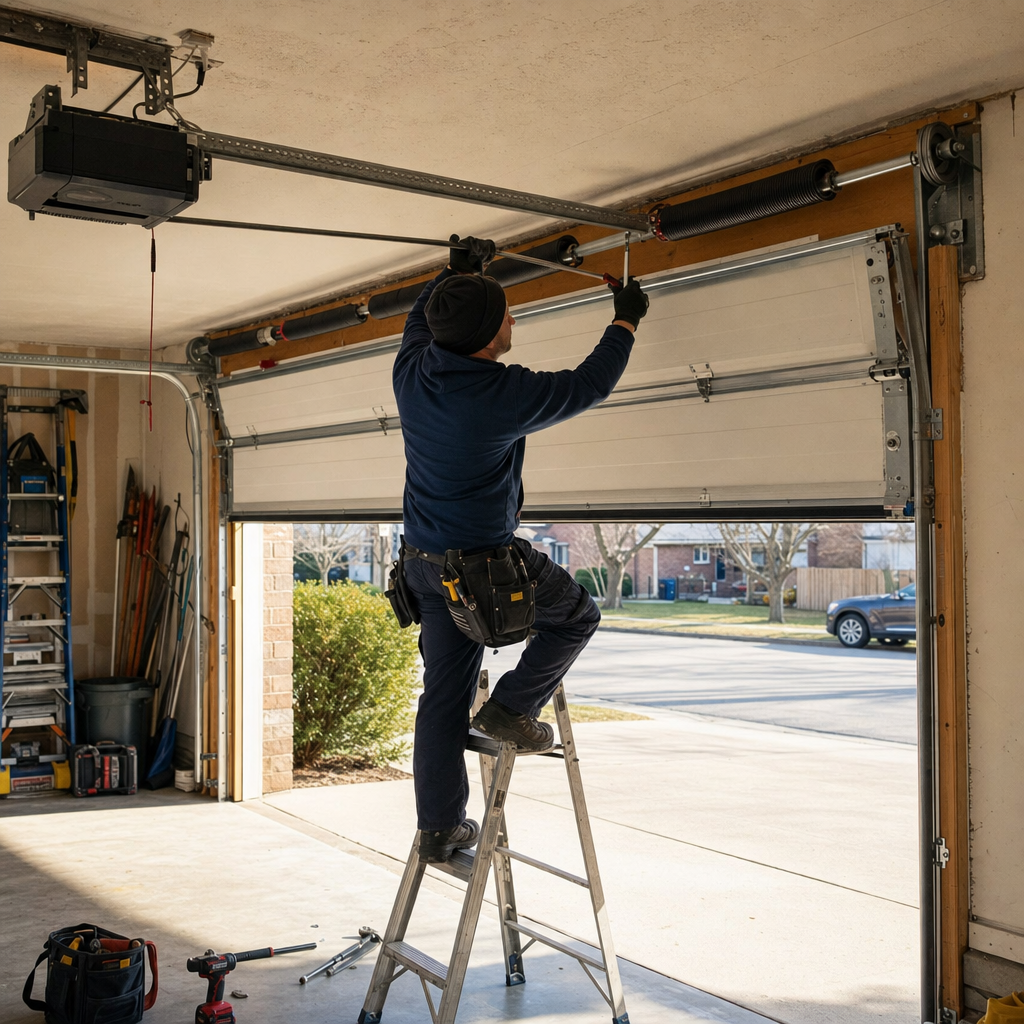
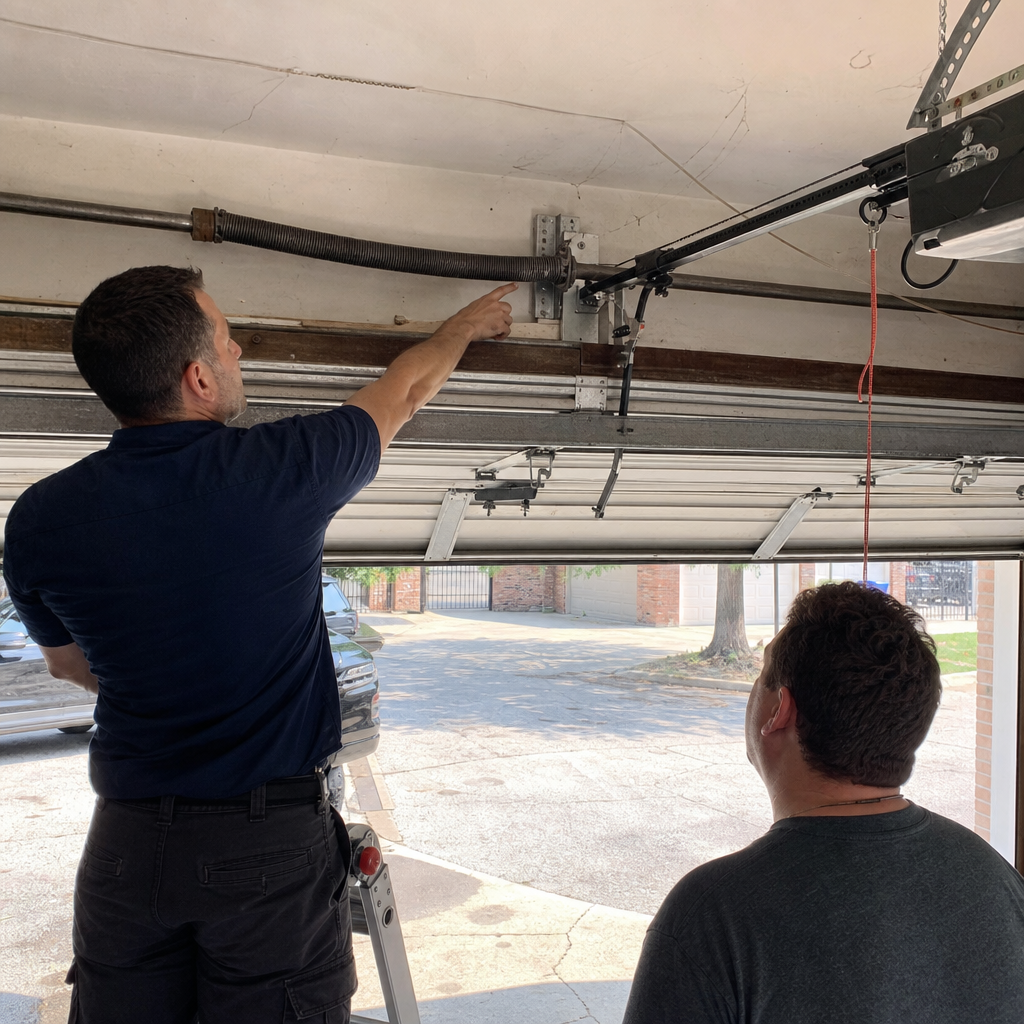
Edward gets more “won’t close” calls in November than any other month. Not because sensors fail in November — because that’s when Chicago’s first hard freeze hits moisture-swollen wood framing and everything tightens up at once. After eight years running Regal Garage Door Repair Greater Chicago, we’ve learned that winter close-failures in this city follow a completely different diagnostic path than the warm-weather version you’ll read about in generic guides. The lake-effect moisture that warps wooden jambs and swells the door’s bottom section against the opening creates a physical interference that no amount of sensor cleaning or limit adjustment will fix, because the problem is the door’s geometry, not its electronics.
Chicago’s November Failure Pattern: When the Door Itself Becomes the Obstruction
Here’s what happens in neighborhoods like Bridgeport, Avondale, and Jefferson Park every autumn. Chicago’s brick bungalows and two-flats — built mostly between the 1890s and 1950s — have detached alley garages with wood-framed openings that absorb moisture all fall. The bottom section of an older Clopay or Amarr steel door sits against a wood jamb that’s expanded from October rains and lake humidity. Then the first hard freeze arrives, typically in mid-November, and that swollen wood locks against the door’s bottom edge or track hardware.
The homeowner presses the button. The opener hums, reverses, or blinks its lights. They clean the sensors — still won’t close. They adjust the limits — still won’t close. They call us, and Edward finds a door that’s physically jammed against a warped jamb or a bottom seal frozen to an uneven concrete apron.
This is a seasonal geometry problem disguised as an electronics problem. The fix isn’t recalibrating your LiftMaster or Chamberlain opener — it’s relieving the physical interference, which might mean planing a swollen jamb, shimming a settled apron, or simply waiting for spring and managing the gap temporarily.
Key distinction: If your door won’t close only when it’s cold, suspect geometry. If it won’t close regardless of temperature, start with sensors and electrical.
The Right Diagnostic Sequence for a Door That Won’t Close
After hundreds of Chicago garage doors, we’ve settled on a specific order that saves homeowners time and money. Skip around randomly and you’ll replace parts that aren’t broken while missing the actual cause.
Step 1: Safety Sensors — The Two-Minute Test
Look for the small LED lights on each sensor eye at the bottom of your door tracks. Both should glow steady (usually amber on one side, green on the other). If either is blinking, off, or dim, you’ve found your problem.
- Wipe both lenses with a clean cloth — salt film from alley traffic is a Chicago-specific issue we see constantly on detached garages
- Check that nothing blocks the beam: a shovel, recycling bin, or ice buildup
- Verify the sensors face each other directly — a bumped sensor can point slightly off-center
- Look for a loose wire, especially where the cable enters the garage wall on alley-facing installations
If both LEDs glow steady and the door still reverses immediately, the sensors aren’t your issue. Move to step two.
Step 2: Opener Limit Switch — The Close-Position Setting
Your opener has internal limits that tell it how far to travel before stopping. When these drift — or when a previous owner set them wrong — the door reaches what the opener thinks is “closed” while there’s still a visible gap.
One-sentence test: If your door travels fully down, touches the floor, then immediately reverses, your close limit is set too far and the opener thinks it hit an obstruction.
On Chamberlain and LiftMaster chain-drive units, the limit dials are typically on the side or back of the motor housing. We don’t recommend adjusting these yourself unless you’re comfortable with the mechanism — an incorrectly set limit can cause the opener to force the door against the floor or fail to reverse when it should.
Step 3: Physical Obstruction — The Visual Sweep
This sounds obvious, but we’ve driven to calls where a garden hose, fallen broom, or chunk of ice was blocking the door’s path. In Chicago’s alley garages, wind-blown debris accumulates behind doors that face east toward the lake.
One-sentence test: Disconnect the opener by pulling the red release cord and try to lower the door by hand — if it binds at the same spot every time, something physical is interfering.
Step 4: Track Alignment — The Roller Check
Bent or loose tracks cause the door to hang up at a specific height. Look for:
- Rollers that pop out of the track or ride on the track edge rather than inside it
- Gaps between the track and the jamb bracket — loose hardware lets the track shift
- Vertical tracks that aren’t perfectly plumb — common in garages where the frame has settled
One-sentence test: With the opener disconnected, lift the door manually — if it sticks at one height consistently, follow that height around to find the track interference.
Step 5: Frame Geometry — The Chicago Special
This is where generic repair guides end and Chicago-specific knowledge begins. In bungalow-belt neighborhoods, glacial clay heave tips door frames slightly forward over decades. The bottom of the door contacts the concrete apron before the opener reaches its closed-limit position. The opener stops, reverses, or clicks — and the homeowner sees “won’t close.”
The real issue is a 1-inch apron gap that’s closed over decades of soil movement. A technician who doesn’t shim or level the apron before adjusting tracks will keep chasing a binding door that no mechanical fix alone can solve. Edward carries composite shims and self-leveling compound on every truck specifically for this scenario.
One-sentence test: Look at your door’s bottom edge relative to the concrete — if the gap is visibly tighter on one side, or if the door scrapes the apron before fully seated, you’ve got a geometry problem, not an opener problem.
DIY Fixes vs. When to Call Edward
We’re straightforward about what you can handle yourself and what requires a trained technician — especially with high-tension spring systems and overhead hardware that can cause serious injury.
| Problem | DIY or Pro? | Typical Cost if We Handle It |
|---|---|---|
| Salt film or ice on sensor lenses | DIY — wipe with clean cloth, warm water if needed | $0 |
| Ice frozen to bottom seal | DIY — warm (not boiling) water to melt, then dry | $0 |
| Small debris in door path | DIY — remove and test | $0 |
| Sensor realignment or wiring | Pro — electrical diagnosis, proper mounting | $120–$240 (track/sensor service) |
| Limit switch adjustment | Pro — safety-critical setting | $120–$320 (opener repair) |
| Track realignment or roller replacement | Pro — tension hazard, precision required | $120–$240 track; $110–$220 rollers |
| Apron shimming for settled frame | Pro — structural correction, leveling compound | $150–$600 (repair range) |
| Bottom section replacement from chronic binding | Pro — panel sizing, seal integration | $250–$500 panel replacement |
Safety note: Never attempt to adjust or remove torsion springs, cables, or spring anchor brackets. These components store lethal tension and require specialized tools and training. We’ve seen serious injuries from well-meaning homeowners who watched a video and thought they could handle it. When your door won’t close and the cause involves springs, cables, or overhead hardware, call a professional.
What Same-Day Service Looks Like in Chicago
When you call (833) 895-4082, Edward handles the job himself — not a subcontracted crew, not a dispatcher sending whoever’s available. That’s the owner-operated difference. We carry parts for LiftMaster, Chamberlain, Genie, and the other major brands, so most close-failure repairs finish in a single visit.
Our Garage Door Repair service covers the full diagnostic sequence above, and we price by the repair type, not by the hour. Here’s what Chicago homeowners typically pay for close-related issues:
- Sensor realignment or wiring repair: $120–$240
- Opener limit adjustment or internal repair: $120–$320
- Track realignment: $120–$240
- Roller replacement (full set): $110–$220
- Bottom panel replacement from binding damage: $250–$500
- Comprehensive repair with multiple corrections: $150–$600
Emergency garage door service is built into our business model — not an upsell. When your door won’t close at 10 p.m. and your car is trapped inside or your garage is wide open, we understand the urgency. Eight years, one standard: Edward shows up, diagnoses honestly, and fixes it right.
365 customers have reviewed us at a 4.8-star average across those eight years. That volume reflects hundreds of real completed jobs, not a handful of handpicked testimonials. We work on virtually any door or opener a Chicago homeowner has — it’s familiar territory.
FAQs
Most “won’t close” repairs in Chicago run $120–$320 for sensor, opener, or track issues, while frame geometry problems or panel damage from chronic binding can reach $150–$600. Call (833) 895-4082 for an exact quote — estimates are free.
Yes — Edward carries common sensors, rollers, track hardware, and opener parts for LiftMaster, Chamberlain, and Genie systems on every truck, so most close-failure repairs complete in one visit. Same-day availability depends on call volume, but emergency garage door service is core to what we do.
Repair is almost always cheaper for a door that’s otherwise in good condition — replacement only makes sense when multiple panels are damaged, the frame is structurally compromised, or repair costs approach 60% of a new door. Edward will tell you honestly when a repair makes sense and when it doesn’t, even if the honest answer costs him a sale.
Chicago’s freeze-thaw cycle causes moisture-swollen wood jambs to tighten against the door’s bottom section, and glacial clay heave shifts concrete aprons that were already uneven — a seasonal geometry problem that no sensor cleaning or limit adjustment can fix because the door is physically jammed, not electronically confused.
When You’re Ready to Get It Fixed
If you’d rather have it looked at, Regal Garage Door Repair Greater Chicago offers a no-pressure assessment in Chicago — call (833) 895-4082. Edward handles the job himself, diagnoses honestly, and fixes it right the first time. Tell me what it’s doing and I’ll tell you exactly what’s wrong — no guessing, no upselling.
Written by Edward Campbell, Owner & Lead Technician at Regal Garage Door Repair Greater Chicago, serving Chicago, IL.