
Fast, Reliable Garage Door Installation Across Chicago Loop
Garage door installation in Chicago Loop typically costs $700–$2,200 for commercial rolling steel or heavy-duty sectional doors, with most high-rise parking structure and loading dock projects completed within one to two business days. We specialize in the commercial-grade installations that define this district—not residential driveways, but fire-rated rolling steel doors, parking garage sectional systems, and loading dock operators built for 24/7 operation. If your building sits near the elevated CTA ‘L’ tracks or includes underground parking exposed to Chicago’s road salt, the hardware choices we make on day one determine whether your door lasts two years or ten. Call (833) 895-4082 for a free estimate.
We’ve worked in the Loop for eight years, and we know the difference between a door that looks right and one that’s actually spec’d for this environment. Edward Campbell, our owner and lead technician, handles every Chicago Loop installation personally—no subcontracted crews, no franchise scripts. When you’re managing a building on Wabash, Michigan Avenue, or LaSalle Street, you need someone who understands Chicago’s commercial building codes, the salt corrosion that attacks lower-level parking structures, and the vibration issues that come with proximity to the ‘L’.
Why Regal Garage Door Repair Greater Chicago Is Chicago Loop’s Preferred Garage Door Installation Company
Our Garage Door Installation team has completed dozens of projects in Chicago Loop’s high-rise buildings, from 1960s office towers to modern mixed-use developments. We understand the specific requirements of commercial door installations in ZIP code 60695 and surrounding Loop addresses—fire-rated assemblies, high-cycle spring systems, and operators rated for continuous operation.
365 customers have reviewed us across eight years in business, averaging 4.8 stars. That volume matters. It means we’ve seen the same failure patterns repeatedly—salt-corroded torsion springs in underground garages, track misalignment from ‘L’ vibration, metal fatigue from temperature swings—and we’ve developed specific solutions for each.
Response time to Chicago Loop is typically same-day or next-day for standard installations, with emergency service available when a failed door is blocking a loading dock or parking entrance. Edward Campbell answers calls directly and schedules the work himself. You’ll know who’s showing up and when.
Our local knowledge runs deeper than map familiarity. We know which Loop buildings were converted from commercial to residential use and still have undersized door openings. We know which parking structures on Lower Wacker and adjacent streets get the worst salt infiltration. We spec hardware accordingly—stainless fasteners, galvanized springs, sealed bearings—not because it costs more, but because standard residential-grade hardware fails prematurely in this environment.
Our Garage Door Installation Services in Chicago Loop
New Door Installation
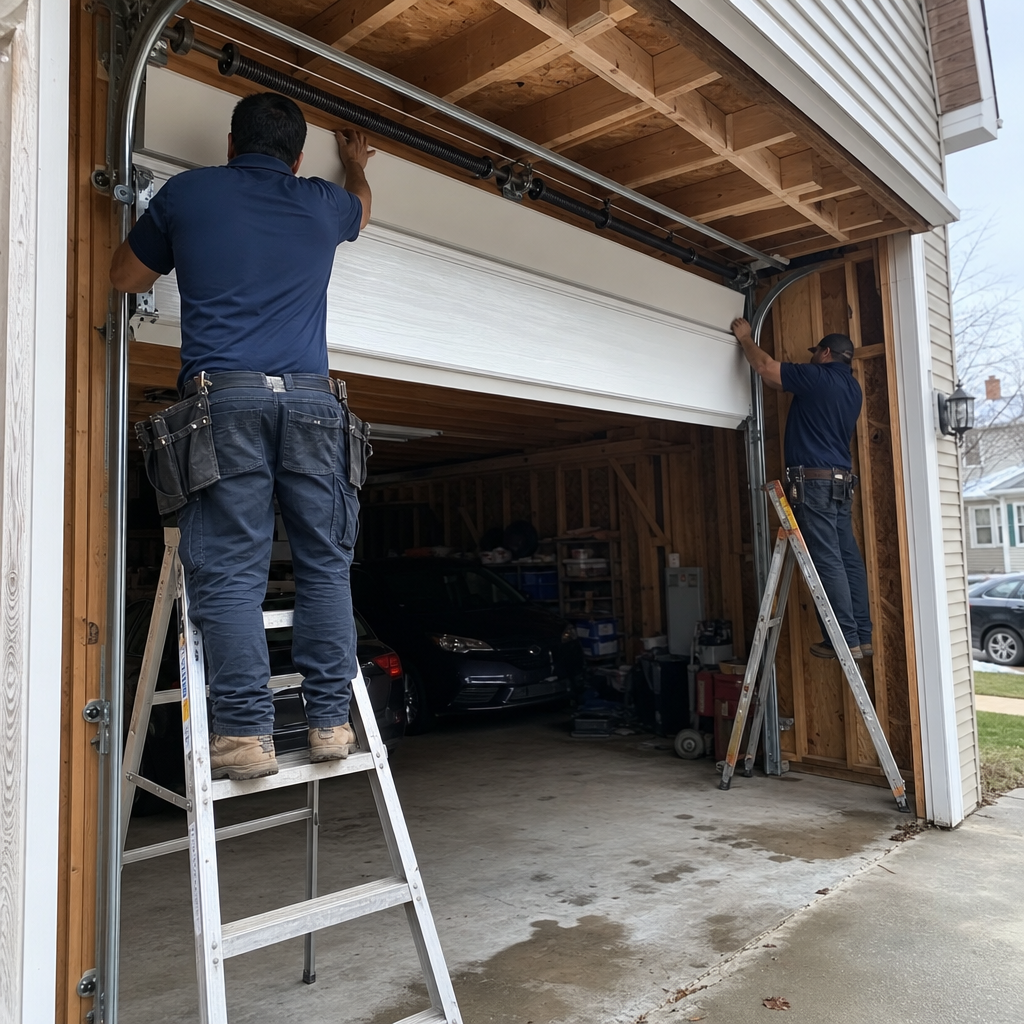
New door installation in Chicago Loop means commercial-grade work. We install rolling steel curtain doors for loading docks, heavy-duty sectional doors for attached parking garages, and service-bay doors for building mechanical floors. Every installation starts with a site assessment: measuring the opening, evaluating the existing track anchoring to masonry, checking for salt corrosion on adjacent hardware, and determining whether the location requires fire-rated assemblies per Chicago commercial code.
We installed a fire-rated rolling steel door at a loading dock on LaSalle Street in a 1970s office tower. The original door’s track had become misaligned from years of CTA ‘L’ vibrations, so we replaced the entire assembly with a high-cycle model, using stainless steel fasteners and galvanized springs to resist salt migration from the adjacent parking garage. That’s the level of specificity Chicago Loop buildings demand.
Single Car Door
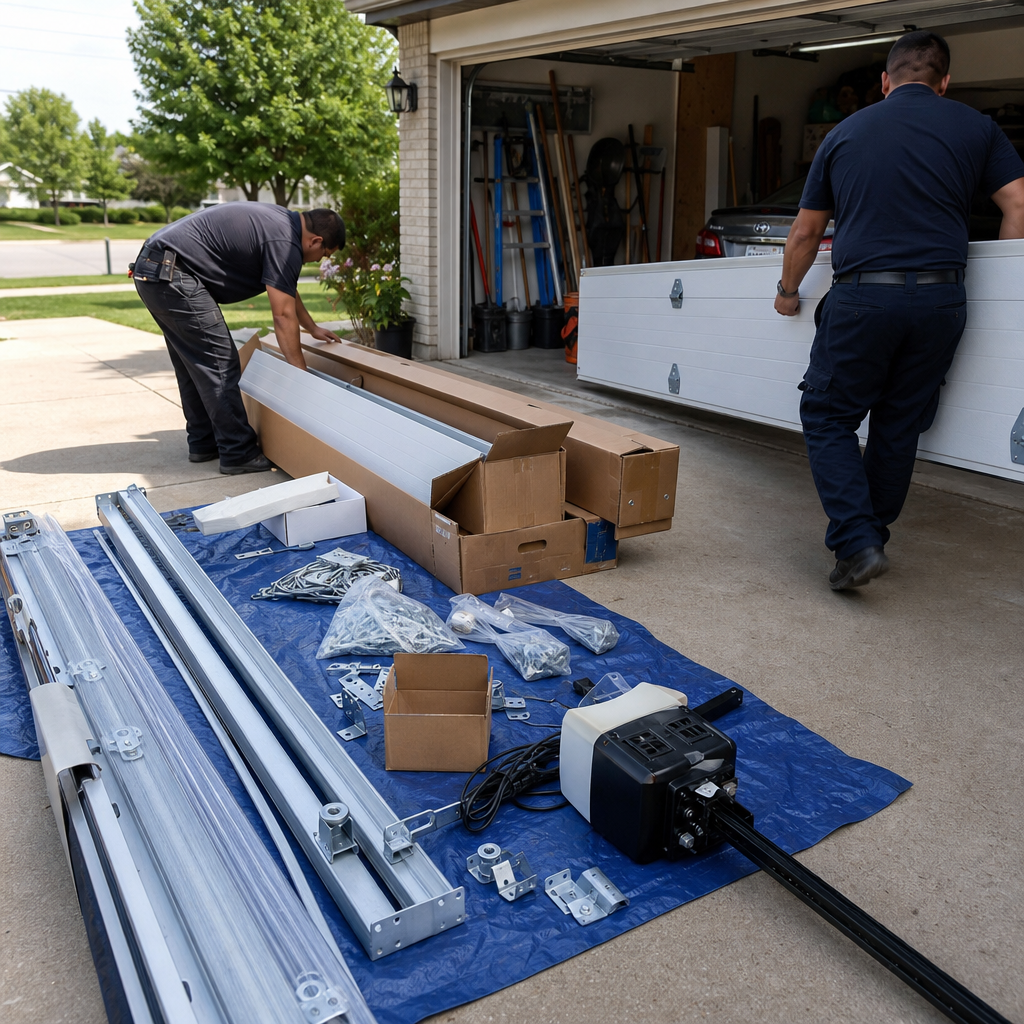
Single car door installations in Chicago Loop are rare compared to surrounding neighborhoods, but they do appear in converted commercial buildings and a handful of townhome-style developments near the district’s edges. When we do install single doors here, we spec them for the same environmental stresses as commercial installations—salt-resistant hardware, vibration-resistant track anchoring, and insulation rated for the temperature swings between sub-zero winters and 95°F summers. A single door in a Loop parking structure still opens and closes dozens of times daily; we install accordingly.
Double Car Door
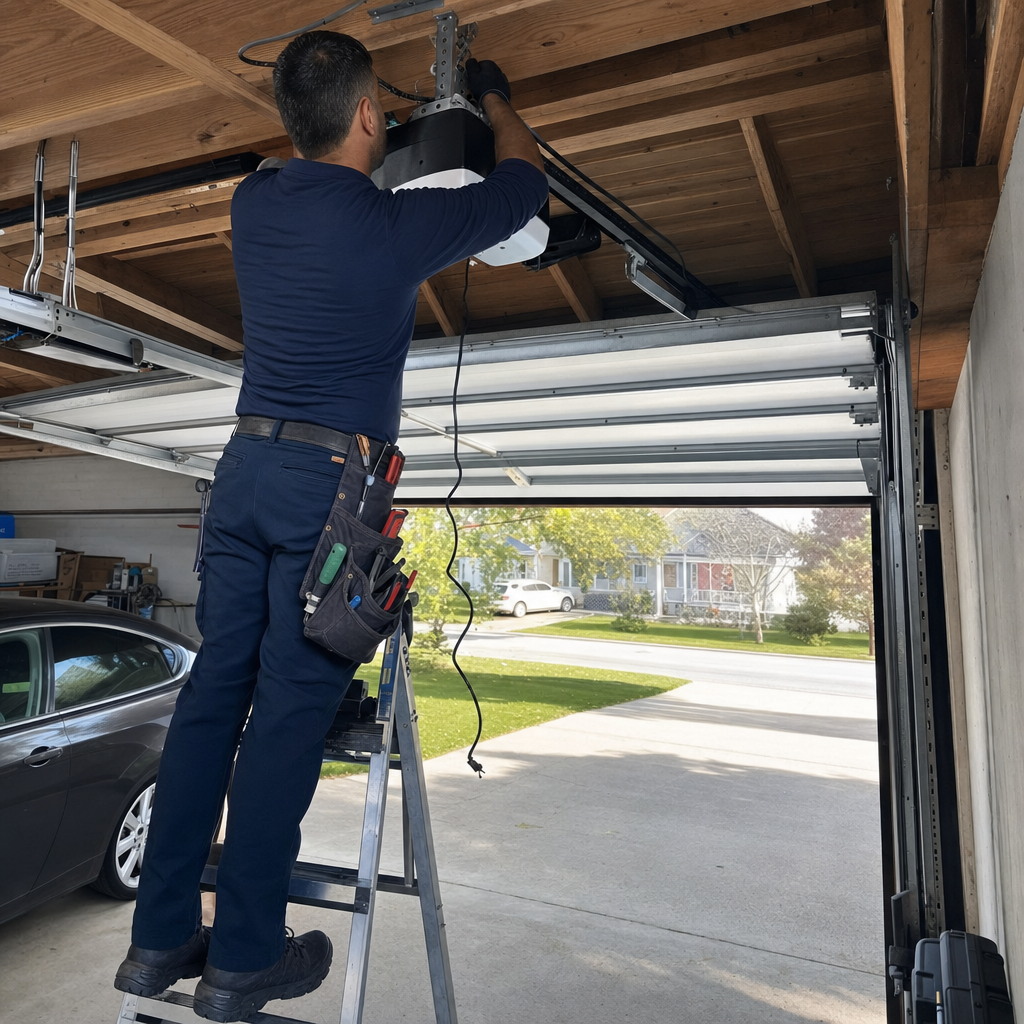
Double car door installations in Chicago Loop typically serve small commercial fleets, service vehicle bays, or residential parking in converted buildings. These require wider openings and heavier-duty spring systems to handle the increased weight and cycle frequency. We size torsion springs for the actual usage pattern—doors that cycle 50+ times daily need high-cycle springs rated for 25,000–50,000 cycles, not the standard 10,000-cycle springs found in residential installations. We also reinforce track mounting to masonry, using expansion anchors and epoxy-set bolts where ‘L’ vibration is a known factor.
Custom Garage Door
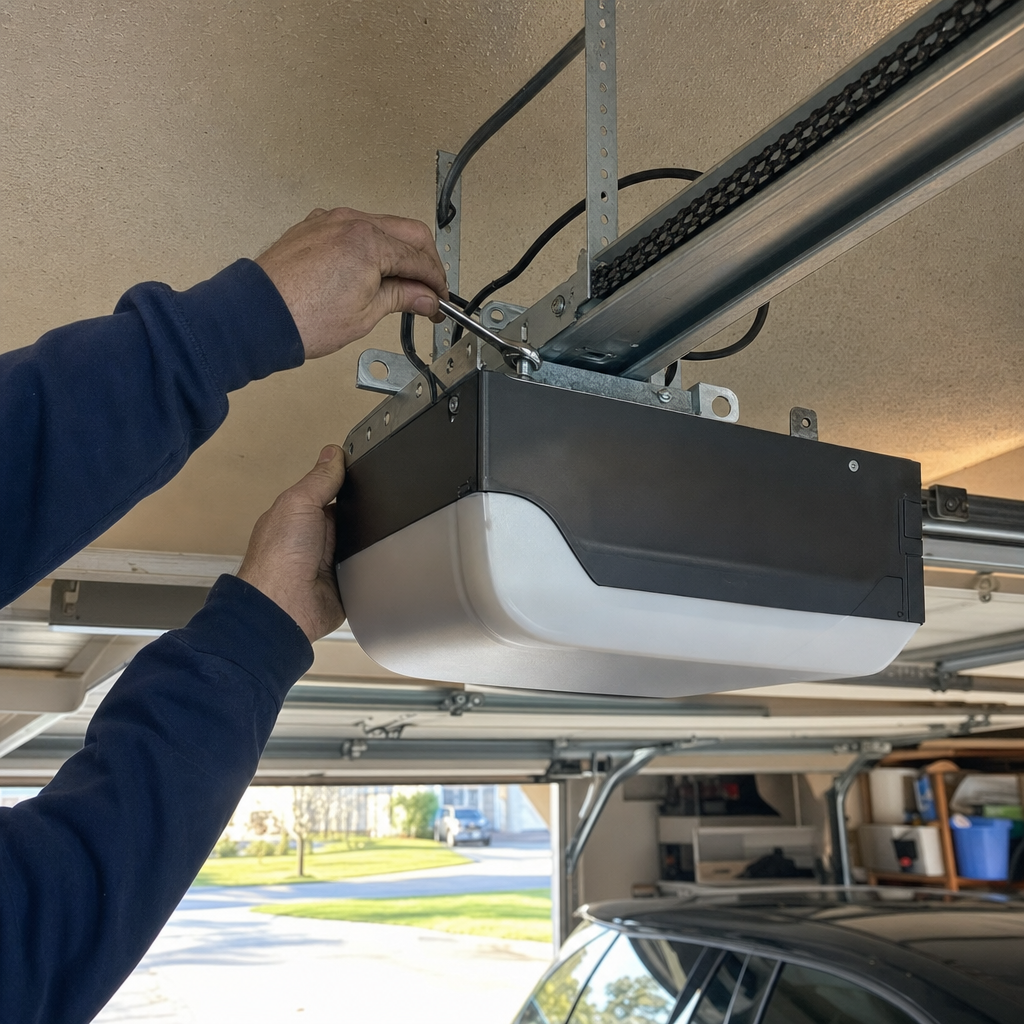
Custom garage door installations in Chicago Loop address unique architectural requirements, non-standard openings, and specific building code demands. We’ve fabricated and installed custom rolling steel doors for historic building renovations where standard sizes won’t fit, and we’ve matched finishes to building exteriors on Michigan Avenue addresses where appearance matters as much as function. Custom work here also means custom engineering: doors that need to meet specific wind-load ratings, fire-resistance ratings, or acoustic isolation requirements. Edward Campbell measures every opening personally and sources materials from manufacturers who can deliver to commercial spec.
Steel Doors
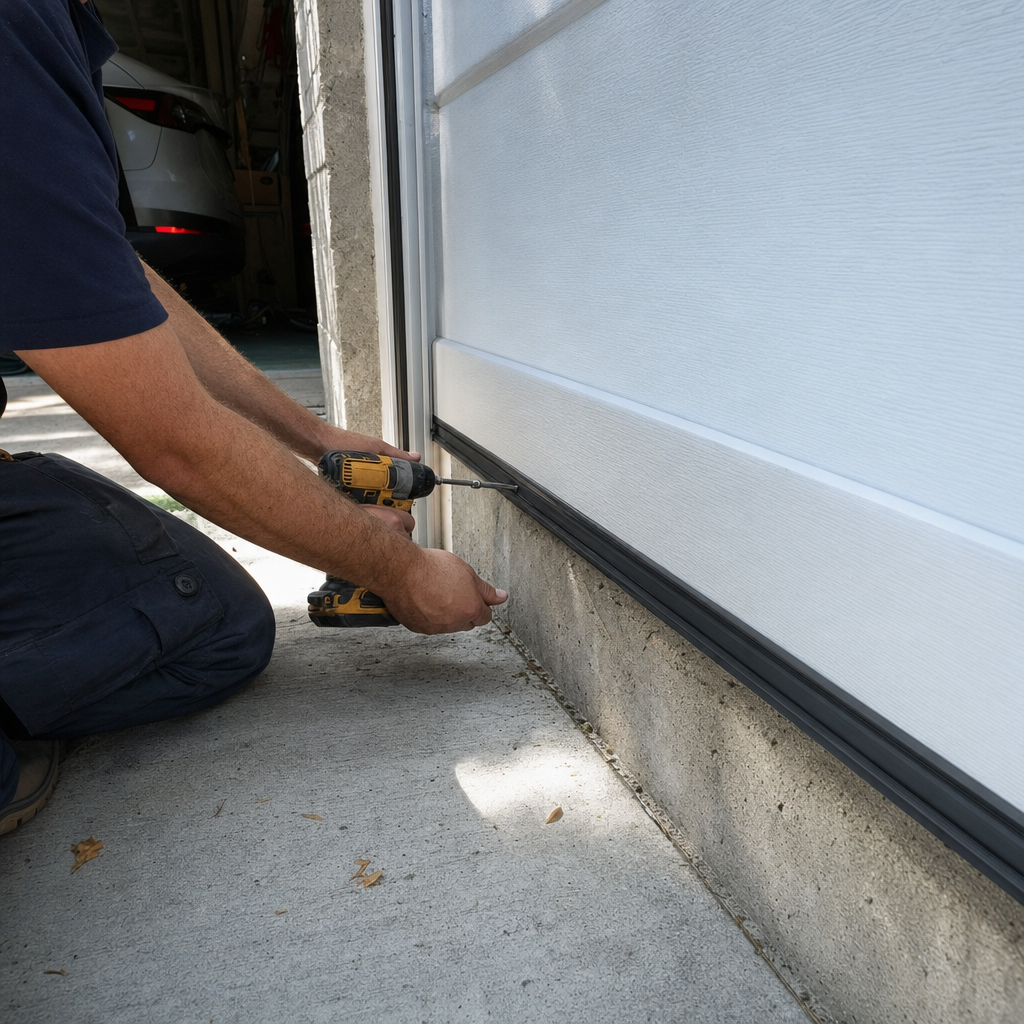
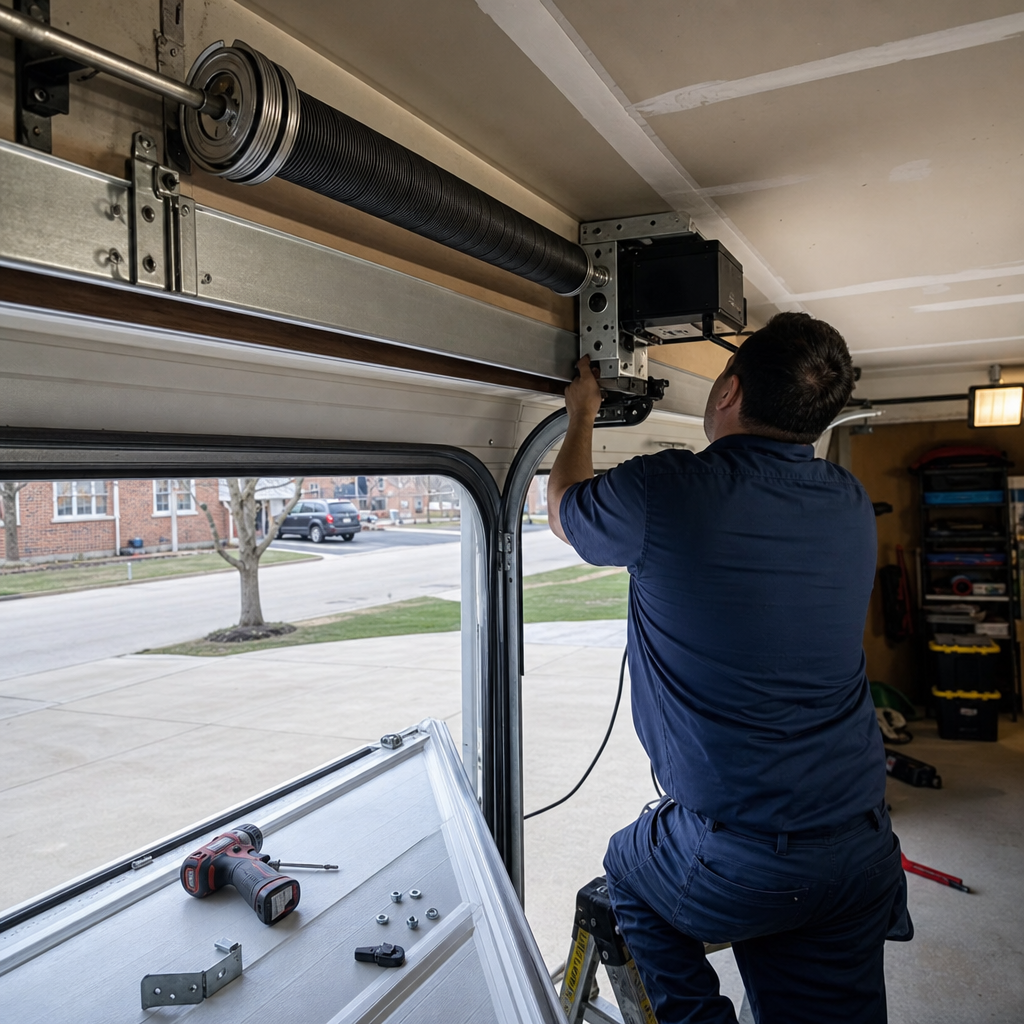
Steel doors are the standard for Chicago Loop commercial installations, and we install them in configurations from light-duty rolling curtains to heavy-duty insulated sectional systems. The critical choice isn’t just gauge thickness—it’s the coating system. We specify hot-dip galvanized or powder-coated steel for Loop installations because standard painted steel begins showing rust within 18 months in salt-exposed parking structures. We also specify thermal breaks in insulated sections to prevent condensation and interior corrosion, a common failure mode in heated parking garages during Chicago winters.
Wood Doors
Wood garage door installations in Chicago Loop are uncommon but appear in high-end residential conversions and some architecturally sensitive commercial restorations. When we install wood doors here, we use marine-grade finishes and specify hardware with corrosion resistance matching our steel installations—the same salt and vibration stresses apply. We also engineer for weight: wood doors are heavier than steel, requiring upgraded spring systems and more robust opener mounts.
What happens when you call
- 1
A real person answersNo phone trees — you reach a local pro.
- 2
You get an upfront price rangeHonest numbers before anyone is dispatched.
- 3
A background-checked tech heads outLicensed & insured, dispatched right away.
- 4
You approve before work beginsNothing starts until you say go.
Trusted Brands We Service in Chicago Loop
We work on Chamberlain, Genie, Clopay, and Amarr equipment regularly, and we maintain parts inventory for these brands to minimize downtime on Chicago Loop installations. Chamberlain and Genie commercial operators are common in Loop parking structures—we install and service their heavy-duty chain-drive and jackshaft models rated for continuous operation. Clopay and Amarr provide the sectional door systems we specify for most high-rise garage applications, with insulation and wind-load options that meet Chicago code requirements. Because Edward Campbell handles procurement directly, we don’t wait on third-party parts distributors when a Loop building needs a door back in service.
Common Garage Door Installation Problems We See in Chicago Loop
- Road salt corrosion destroys standard hardware within two years. Chicago applies more road salt per lane-mile than almost any U.S. city, and that salt migrates into underground and lower-level parking structures. We regularly find torsion springs and bearing plates on commercial doors corroded to failure points in 18–24 months. We spec galvanized springs, stainless steel fasteners, and sealed bearing plates on every Loop installation.
- CTA ‘L’ vibration loosens track anchoring over time. The elevated tracks that define the Loop’s perimeter generate constant low-frequency vibration in adjacent buildings. We’ve found lag bolts anchoring commercial door tracks to masonry completely backed out, causing track misalignment and premature cable wear on doors that looked recently serviced. We use expansion anchors and epoxy-set bolts in vibration zones.
- Extreme temperature swings fatigue high-cycle springs prematurely. Sub-zero winters to 95°F summers cause rapid metal fatigue in springs on doors operating 24/7 in parking structures. We install high-cycle springs rated for 50,000+ cycles in Loop structures with continuous operation, and we inspect spring tension seasonally as part of maintenance agreements.
- Fire-code compliance gaps in older building conversions. Loop buildings converted from commercial to mixed-use sometimes retain original doors that don’t meet current fire-rating requirements for parking structure separation. We assess existing installations against Chicago’s commercial building codes and specify replacement doors with proper UL fire ratings where required.
Pricing for Garage Door Installation in Chicago Loop, IL
Here’s what garage door installation costs in Chicago Loop’s market:
| Service | Price Range |
|---|---|
| New Door Installation | $700–$2,200 |
| Steel Doors | $700–$2,200 |
| Custom Garage Door | $700–$2,200 |
Actual cost depends on door size, cycle rating, fire-rating requirements, and the condition of existing track mounting and electrical supply. Commercial installations in high-rise parking structures typically run toward the higher end due to heavier-duty hardware, high-cycle springs, and code-compliant fire ratings. Conversions of existing openings with damaged track anchoring or salt-corroded hardware may require additional structural prep. We provide exact, itemized quotes before any work begins—call (833) 895-4082 for a free estimate.
We Also Serve Cities Near Chicago Loop
We install commercial and residential garage doors throughout downtown Chicago and adjacent neighborhoods, including Near South Side, Near North Side, West Town, and Lincoln Park. Each area has distinct building stock and environmental stresses—salt exposure varies, vibration factors differ, and code requirements shift between commercial core and residential districts. We adjust our specifications accordingly.
Serving Chicago Loop, IL — Our Local Coverage Area
We’re based in the Chicago Loop area and know this community well. Use the map below to see our service coverage — if you’re nearby, we can almost certainly help.
FAQs — Garage Door Installation in Chicago Loop
Yes, we install fire-rated rolling steel doors that meet Chicago commercial building code requirements for Loop high-rises. These installations require UL-listed fire doors with proper release mechanisms, fusible links, and integration with building fire alarm systems. Edward Campbell verifies fire-rating labels and documents compliance for building management. Call (833) 895-4082 to schedule a code-compliance assessment.
Road salt from Chicago’s heavy winter applications corrodes torsion springs, bearing plates, tracks, and bottom seals on commercial doors within 18–24 months in lower-level and underground parking structures. We combat this with galvanized springs, stainless steel fasteners, sealed bearings, and corrosion-resistant coatings on all Loop installations. Call (833) 895-4082 for hardware spec’d for your building’s salt exposure level.
Yes, we install heavy-duty sectional doors with high-cycle springs rated for 50,000+ cycles and commercial operators built for continuous operation. These systems include thermal breaks, wind-load reinforcement, and backup power options where required. We assess cycle frequency, door size, and environmental exposure to size components correctly. Call (833) 895-4082 for a specification review.
We install Chamberlain and Genie commercial operators most frequently in Loop high-rises, selecting chain-drive, belt-drive, or jackshaft configurations based on door weight, cycle frequency, and headroom constraints. Both brands offer models with continuous-duty ratings, battery backup, and building management system integration. We maintain parts inventory for fast repair turnaround. Call (833) 895-4082 to discuss opener specifications for your building.
Yes, if your building sits near the elevated CTA tracks, vibration will gradually loosen standard lag-bolt track anchoring and cause misalignment. We address this during installation by using expansion anchors or epoxy-set bolts in masonry, reinforcing track mounting points, and specifying flexible connections where appropriate. We’ve corrected vibration damage on LaSalle Street and Wabash Avenue buildings—prevention costs less than repair. Call (833) 895-4082 for vibration-resistant installation.
Ready to install a garage door built for Chicago Loop’s demands? Edward Campbell will assess your building, spec hardware for salt resistance and vibration durability, and deliver an exact quote with no obligation. Same-day and next-day scheduling available. Call (833) 895-4082 now for your free estimate.
Written by Edward Campbell, Owner at Regal Garage Door Repair Greater Chicago, serving Chicago Loop since 2016.