
Garage Door Cable Replacement in Chicago: What the Rust Tells Us
Garage door cable replacement in Chicago typically costs $130–$250 per cable and is usually completed same-day when you call (833) 895-4082. Edward Campbell, Owner & Lead Technician at Regal Garage Door Repair Greater Chicago, handles every cable job personally — and in this city’s alley garages, he’s learned to look past the cable itself to what’s actually causing the failure.
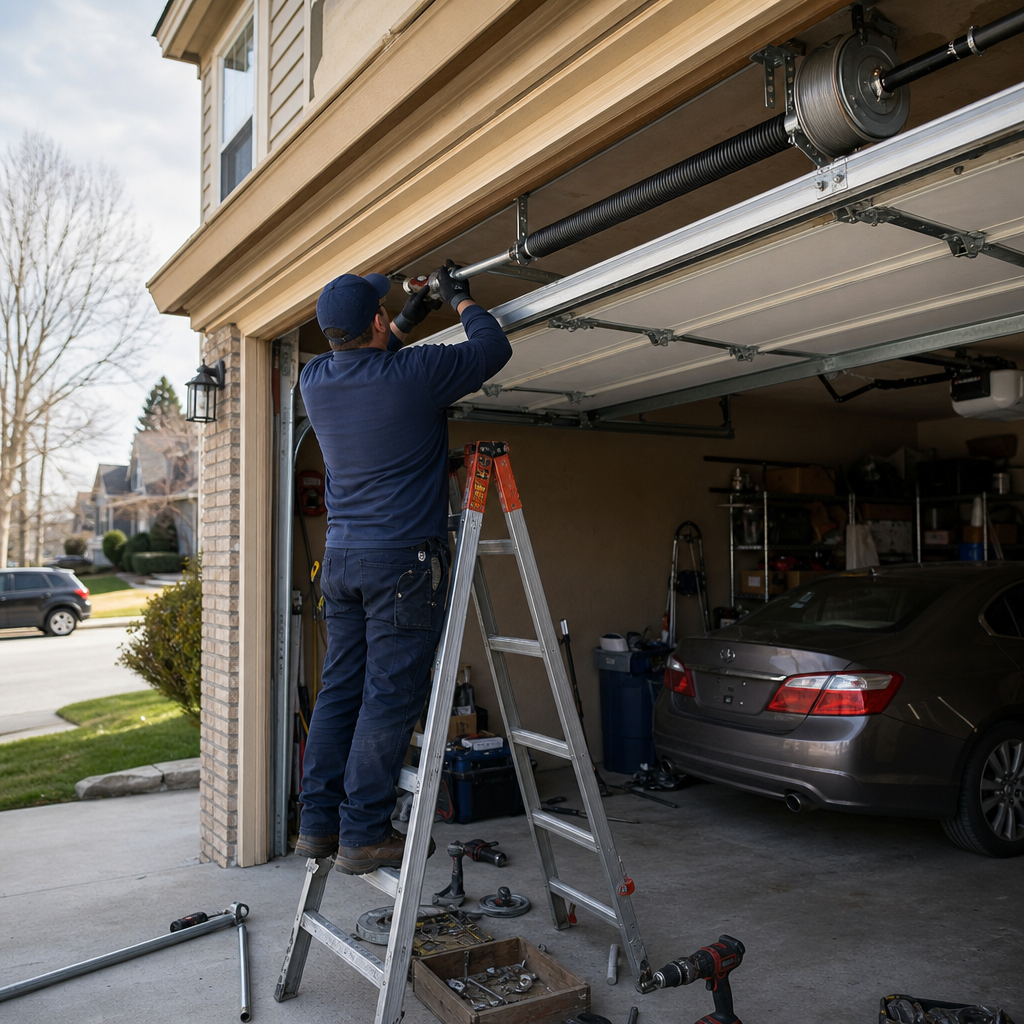
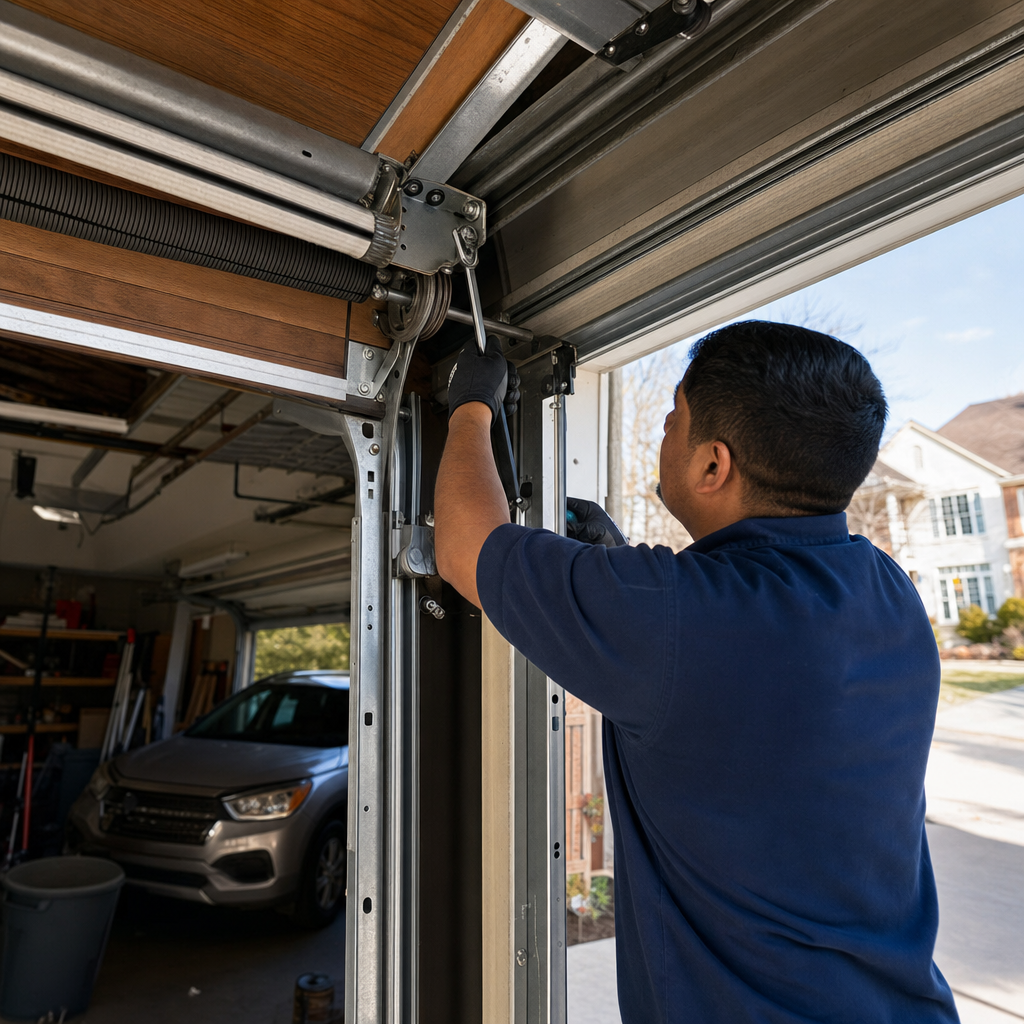
Last February, we were called to a detached garage off Belmont Avenue in Avondale. The homeowner had already replaced his own cable six months prior after watching a video online. The new cable was fraying again, this time at the bottom bracket. When we pulled the bracket, the galvanized steel was paper-thin from corrosion — actively dissolving from the inside out. The cable wasn’t worn. It was being eaten alive by the bracket it threaded through. We replaced the bracket, the cable, and inspected the drum grooves for salt damage. That door is still running clean a year later. The previous “repair” would have failed again by spring.
That’s the pattern we see across Chicago’s bungalow belt and two-flat neighborhoods: cable failure is usually the symptom, not the disease. And a technician who swaps the cable without reading the rust is planning their own callback.
Why Chicago’s Alley Garages Destroy Cables Differently
Chicago’s roughly 1,900 miles of residential alleys create a garage environment found almost nowhere else in America. These detached, unheated structures — typically 1910s to 1950s construction — sit behind the main house, exposed on all sides, with concrete aprons that heave and settle on the city’s glacial clay subsoil. The result is a corrosion chain that inland markets simply don’t replicate.
Here’s how it works: road salt tracked in on tires all winter doesn’t just melt and drain away. It crystallizes in the concrete pores, attracts lake-effect humidity even on cold days, and creates an electrolytic bath that attacks galvanized hardware. The bottom bracket — the stamped-steel fitting where the cable terminates at the door’s lowest panel — sits closest to this salt-saturated concrete. It’s usually the first component to fail, and it fails from the inside, where you can’t see it without unthreading the cable.
Meanwhile, the torsion drum at the top of the door collects the same salt mist. The grooves that seat the cable develop micro-pitting. A cable riding through those grooves experiences abrasive wear that has nothing to do with normal door cycles. In neighborhoods like Bridgeport and Jefferson Park, where garage slabs heave asymmetrically, one cable carries more tension than the other. The overloaded cable frays faster, but replacing it alone — without addressing the level, the drum, and the bracket — guarantees premature failure of the new part.
We’ve worked on Chamberlain and Genie opener systems in these conditions for eight years. The openers themselves often outlast the hardware they’re connected to.
What We Check Before Touching a Cable
Every cable replacement Edward performs includes three diagnostic steps that most operators skip or charge extra for. They’re not add-ons. They’re the job.
- Bottom bracket extraction and inspection. We unthread the cable and remove the bracket to check wall thickness. If it’s below spec or shows active rust scaling, we replace it with a galvanized or stainless bracket rated for salt exposure. No point threading a new cable through a fitting that’s dissolving.
- Drum groove measurement. We run a pick through each groove to feel for pitting or flaking. Minor wear gets noted; significant groove damage means drum replacement. A new cable on a damaged drum will fray in weeks, not years.
- Tension equalization test. With the door disconnected from the opener, we lift manually and check for binding or uneven travel. If one side drags, we know the slab is out of level or the tracks are racked. We shim and adjust before the cables go on — otherwise we’re setting up asymmetric wear from day one.
This diagnostic sequence takes an extra fifteen minutes. It saves callbacks, and it saves homeowners from paying for the same repair twice.
When Both Cables Must Be Replaced Together
In Chicago’s older housing stock — the brick bungalows of the 1920s and 1930s, the greystone two-flats — garage slabs heave on glacial clay that shifts with every freeze-thaw cycle. The concrete apron settles lower on one side. The door hangs slightly crooked in its opening. One cable carries 60% of the load; the other carries 40%.
Replacing only the frayed cable in this situation is a mistake. The new cable, at full spec, creates even more imbalance against the stretched, fatigued cable on the opposite side. Within a season, the old cable fails too — or worse, the uneven tension damages the torsion spring and the center bearing.
We replace both cables simultaneously on any door where the slab shows visible out-of-square condition, where one cable shows significantly more wear than the other, or where the door has been binding or noisy before the cable failure. The additional material cost is modest. The avoided callback is substantial.
We source our garage door parts in Chicago from suppliers who stock cable assemblies rated for the city’s corrosion environment — heavier galvanizing, sometimes stainless options for coastal-exposure equivalents.
Garage Door Cable Replacement Cost in Chicago
Our pricing is straightforward and consistent across the neighborhoods we serve, from Portage Park to Bridgeport to the Near South Side.
| Service | Price Range |
|---|---|
| Cable Repair / Replacement (single) | $130 – $250 |
| Cable Pair Replacement (recommended for unlevel doors) | $220 – $420 |
| Bottom Bracket Replacement (if corroded) | $45 – $85 per bracket |
| Drum Replacement (if grooved/pitted) | $80 – $160 per drum |
| Spring Repair (if damaged by uneven tension) | $180 – $340 |
| Track Realignment / Shim (if slab-heave related) | $120 – $240 |
We don’t charge separately for the diagnostic inspection — the bracket check, drum evaluation, and tension test are included in the cable replacement labor. Estimates are free, and we confirm all costs before starting work.
The Safety Reality: Why This Isn’t a DIY Job
Cables on a garage door with an intact torsion spring system are under extreme, stored energy. A standard 7-foot residential door with a torsion spring holds roughly 100–150 pounds of torque at rest. The cables transfer that force to lift the door. If a cable is improperly detached or the winding bars slip during adjustment, that energy releases instantly.
The specific danger in cable work: the cable wraps around the torsion drum in a precise direction and pitch. If you thread it wrong — reverse the wrap, miss a groove, or allow slack during installation — the door can drop uncontrolled, or the spring can unwind violently. We’ve seen DIY attempts that bent the top section of a Clopay or Amarr door, damaged the opener carriage, or worse.
Edward’s training at Triton College’s vocational program in River Grove included formal mechanical systems safety before he ever touched a garage door spring. That foundation matters when you’re working with components that can cause serious injury if mishandled. We don’t provide step-by-step DIY instructions for cable replacement because the risk profile doesn’t justify it. Call a trained professional.
How to Tell If Your Cable Is Actually the Problem
Homeowners can safely perform a visual inspection without touching tensioned components. Look for these specific indicators:
- Fraying concentrated at the bottom bracket. If the cable frays within six inches of the door’s lowest panel, suspect bracket corrosion before cable wear.
- Rust dust or orange staining on the concrete beneath the bracket. This indicates active corrosion inside the bracket body.
- Uneven door travel or one-side sagging. Suggests slab heave and asymmetric tension — both cables need attention, not just the visible fray.
- Smooth, uniform fraying along the cable’s midsection. This is genuine wear from age and cycles, more straightforward to address.
If you see any of these conditions, call (833) 895-4082 and describe what you’re seeing. We can usually diagnose over the phone whether you’re looking at a simple cable swap or a corrosion-chain repair.
What “Tell Me What It’s Doing and I’ll Tell You Exactly What’s Wrong” Means in Practice
Edward’s signature phrase — “Tell me what it’s doing and I’ll tell you exactly what’s wrong — no guessing, no upselling” — isn’t marketing. It’s how he actually answers the phone. When a homeowner in Jefferson Park described a “clunking sound and one side dropping faster,” he diagnosed a failed bottom bracket over the call, brought the part, and had the door running in forty minutes. No cable needed — the bracket had sheared clean through. An operator pushing cable replacement would have sold unnecessary parts and missed the root cause.
That’s the advantage of an owner-led operation where the same person answers the phone, performs the work, and stands behind the result. Edward handles the job himself. Eight years in the trade, 365 verified reviews at 4.8 stars, and a reputation built on honest diagnostics — even when the honest answer is simpler and cheaper than what the homeowner expected.
FAQs
Single cable replacement runs $130–$250 in the Chicago market, with paired replacement at $220–$420 for doors with uneven tension or slab heave. We include bracket and drum inspection at no extra charge. Call (833) 895-4082 for a free exact quote based on your door’s condition.
Yes — we carry cable assemblies, bottom brackets, and drums for all major brands including Chamberlain and Genie systems, and Edward schedules emergency garage door service as part of our core operation. Most cable calls in Chicago are completed within hours of contact.
Cables are a replace-not-repair component — once frayed or corroded, they’re discarded. The real cost decision is whether to replace one cable or both, and whether the brackets and drums need attention too. Replacing both cables on an unlevel door is cheaper than two separate service calls six months apart.
Repeat cable failure in Chicago almost always means the root cause wasn’t addressed: corroded bottom bracket, pitted drum grooves, or slab heave creating uneven tension. A straight cable swap without inspecting these components typically fails within a season. We check all three before installing new cable.
Call Regal Garage Door Repair Greater Chicago
If your garage door cable is frayed, snapped, or running uneven, call (833) 895-4082 now for a free estimate. Edward Campbell will diagnose the actual failure — cable, bracket, drum, or foundation — and fix it once. Same-day service available across Chicago’s neighborhoods, from Portage Park to Bridgeport and everywhere the alley grid runs.
Written by Edward Campbell, Owner & Lead Technician at Regal Garage Door Repair Greater Chicago, serving Chicago, IL.